Understanding Nevada Drug Offenses
 Share
Share
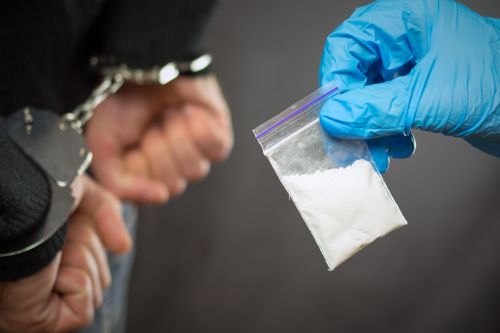
The State of Nevada has numerous criminal drug charges, most of which are very serious and carry substantial penalties. Controlled substance offenses cover all types of drugs, ranging from marijuana to heroin, cocaine, LSD, and prescription medications, and a wide range of prohibited conduct that covers possession, sale, trafficking, and manufacture. For anyone facing drug charges under Nevada law, it is important to understand the types of drug offenses and the potential penalties, and to secure representation from a knowledgeable drug charge defense lawyer.
Misdemeanors and Felonies
A drug charge may be a misdemeanor or felony. Some lower-level drug-related charges are misdemeanors, but most drug offenses, including possession, are felonies.
Misdemeanor charges carry maximum potential penalties of a fine up to $1,000 and jail time of up to six (6) months in a local county or city jail. A court may also order community service, restitution, counseling, or educational classes. Generally, a defendant charged with a misdemeanor does not have the right to a jury trial; cases are decided by a judge in a bench trial. Public consumption or smoking of marijuana in a public place is an example of a misdemeanor drug offense. (Even a simple drug possession charge is a felony.)
Felony charges are classified in five Categories (A, B, C, D, E) for penalty purposes, based on severity of the offense. Category A felonies are the most serious; Category E felonies are the least serious. Individual statutes establish the category of each specific felony charge. Potential felony penalties range from up to a year in county jail for a Category E felony to a life sentence without parole for a Category A felony. Maximum fines range from $2,000 (Category E) to $500,000 (Category A). Felonies encompass many different drug offenses, from possession and selling to trafficking and manufacture.
Drug Schedules
Nevada classifies controlled substances into five Schedules, based on the potential for abuse, safety risks, and accepted medical uses. The Schedules are used to determine the charges for specific types of drugs.
- Schedule I drugs have the highest potential for abuse and lowest rank for safety. Examples are heroin, LSD, marijuana, and ecstasy (MDMA).
- Schedule II substances have high potential for abuse and dependence but accepted medical uses. Examples are cocaine, morphine, and oxycodone.
- Schedule III characteristics are moderate to low potential for dependence, and a lower risk than Schedules I and II. Examples are ketamine and anabolic steroids.
- Schedule IV drugs have a low likelihood of abuse and recognized medical uses. Examples are Alprazolam (Xanax), diazepam (Valium), and zolpidem (Ambien).
- Schedule V drugs have the lowest potential for dependence and abuse and consist primarily of medications containing limited amounts of narcotics, such as low-dose codeine cough syrup.
Specific Drug Charges
There are numerous different drug charges under Nevada law. Overall, the severity of an offense depends on the type of drug (Schedule) and the amount, as well as the nature of the conduct or intent. Offenses may involve possession, sale and distribution, or manufacture of controlled substances. Trafficking is any illegal act involving a large quantity of specific drugs.
Some drug charges are more common than others, including the following:
Illegal Possession of a Controlled Substance
A person can be charged with illegal possession if they have a controlled substance without legal, medical, or scientific justification. Some drugs are outright illegal. Others are illegal to possess without a doctor’s prescription.
There are several different ways that possession may occur. Actual possession involves drugs found on a person at the time of arrest. Constructive possession applies if drugs are found in the vicinity of an individual’s personal property, such as in a home or apartment. Shared possession applies to drugs co-owned with another person for shared use or shared distribution.
While marijuana is a controlled substance, Nevada law permits adults aged 21 and older to legally possess 2.5 ounces of usable cannabis flower and 0.25 ounces of concentrated marijuana for personal use. (Legal possession amounts were increased effective January 1, 2024, from the original legalization amounts permitted beginning in 2017.) Public consumption, driving under the influence of marijuana, and having an open container of marijuana in the passenger area of a vehicle are examples of illegal activities involving marijuana that is legally purchased and possessed.
Possession with Intent to Sell or Distribute
Possession with intent to sell or distribute is a more serious charge than simple possession. A possession with intent charge does not require a completed sale (which is a separate offense) and may arise in several different situations, such as when a person has a substantial amount of drugs, a lot of drugs and cash (especially small bills), or a gun or other weapon, or the arrest occurs in an area known for drugs.
Drug Trafficking
Drug trafficking is a different offense from selling or intent to sell. Trafficking involves knowingly or intentionally selling, manufacturing, bringing into Nevada, or possessing/transporting large quantities of specific Schedule I or II drugs. Even possession for personal use can be trafficking if the quantity of drugs is large enough. Penalties are based on the amount and weight of the drugs.
Driving Under the Influence of Drugs (DUID)
Driving under the influence of drugs is a criminal offense, just as driving under the influence of alcohol. The drugs do not need to be illegal or illegally obtained. A person can be charged with DUID for driving under the influence of any drug.
Possession of Drug Paraphernalia
Possession of drug paraphernalia, like syringes or crack pipes, is a separate crime from possession. Paraphernalia includes any equipment of material intended for manufacture, ingestion, or storage of illegal drugs. Possession or use of paraphernalia is a misdemeanor. Selling or delivering paraphernalia is a felony.
Federal Drug Charges
In addition to drug offenses under Nevada state law, there are also controlled substance laws at the federal level. At The Gersten Law Firm, we represent clients facing both Nevada state and federal drug charges.
Defending Against Drug Charges
An experienced defense lawyer can make a substantial difference in the outcome of a drug case. A lawyer can often negotiate with the prosecutor for a plea on a lesser charge or for alternative conditional terms, such as community service, rehabilitation, probation, and even a suspended sentence. For eligible individuals, Nevada has a Drug Court program that puts the person on probation while the program is being completed and does not involve a conviction on the person’s record. An experienced lawyer can negotiate with the prosecutor and judge for a Drug Court resolution when a person has no prior drug convictions and has not been charged with a sale or trafficking offense.
Regardless of the circumstances of a case, legal representation is essential for a person facing any type of state or federal drug charge in Nevada.
Schedule a Free Consultation with an Experienced Las Vegas Drug Charge Defense Attorney
If you are facing a state or federal drug charge in Las Vegas, Henderson, or elsewhere in Clark County, Las Vegas attorney Joseph Gersten will discuss and evaluate your case based on his extensive investigative and criminal defense experience. Your initial consultation is free-of-charge. Call 702.857.8777 or use our online form to schedule an appointment.