When Can You Legally Carry a Concealed Firearm in Nevada?

 Share
Share
Individual states have different laws relating to open carry and concealed carry of firearms. The State of Nevada has a reputation as a gun-friendly environment, but strict laws and rules apply to concealed carry. If you live in or visit Nevada, it is essential to understand the state’s carry laws to avoid even unintentional conduct that violates the state’s concealed carry restrictions. In this article, criminal defense attorney Joseph Gersten explains the basic concepts of concealed carry in Nevada, highlighting the limitations that apply. Based in Las Vegas, The Gersten Law Firm represents clients in federal and state gun-related cases, including concealed carry offenses.
Concealed Carry v. Open Carry
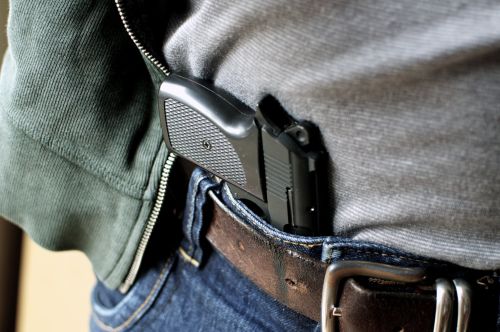
In Nevada, open carry is legal for a person aged eighteen (18) years or older who can legally carry a firearm. Restrictions apply to certain persons, including those convicted of a felony, domestic violence, or stalking. Generally, open carry means having a gun on your person in public, with the firearm being readily observable and not hidden under clothing or otherwise, without the need for a permit or registration. Open carry does not allow an individual to carry a concealed gun, which requires a CFP (Concealed Firearms Permit) or CCW (Carry Concealed Weapon) permit.
The terms constitutional carry, permitless carry, and unrestricted carry are sometimes used to describe gun laws. Constitutional carry, which some states have (but Nevada does not), means that a person can legally carry a firearm either openly or concealed without restrictions. Permitless carry is similar, in that individuals who meet certain qualifications can carry openly or concealed, without getting a permit or license. Unrestricted carry usually refers to either permitless or constitutional carry. State laws vary widely and do not overrule federal laws or carry rules on federal property.
While Nevada allows open carry of a firearm without a permit, the state requires a CFP / CCW permit for concealed carry. To carry in Nevada, a person must abide by all the applicable state, local, and federal laws.
Concealed Carry in Nevada
For concealed carry, Nevada is a “shall-issue” state, which means that law enforcement must issue a concealed firearm permit (CFP or CCW) to a person who meets all legal requirements in NRS 202.3653 - 202.369, Concealed Firearms. Concealed firearms are also governed by Chapter 202 of the Nevada Administrative Code (NAC). For state residents, Concealed Firearm Permits (CFP / CCW) are issued by the Sheriff’s Office for the person’s county of residence, even if the person lives in an incorporated city.
In Clark County, the Las Vegas Metropolitan Police Department (LVMPD) handles the permits. An example of the full requirements is found on the LVMPD Concealed Carry Firearm Permits (CCW) page. The requirements include passing a background check, fingerprinting, and an in-person application process, as well as completion of an 8-hour approved firearms safety course. Disqualifying attributes include:
- Having a felony conviction and certain other convictions
- Being subject to a restraining order or protection against violence
- Currently on probation or parole
- Been declared mentally incompetent or admitted to a mental health facility within five years
- Having a dishonorable military discharge
- Being unlawfully in the United States
- Making false statements on the application
- Other state and federal prohibitions on firearm possession
Residents and non-residents may apply for a permit, but all applications must be submitted in person. Processing may take up to 120 days. A permit is valid for five years; renewal is by a similar process, including a refresher safety course. When carrying a concealed weapon, a person must carry a valid permit and state identification.
If you are a Nevada resident, a Nevada permit is required to carry a concealed weapon in the state. For out-of-state visitors, Nevada recognizes permits from many other states, but not from all states.
Penalties for Concealed Carry Violations
Concealed carry violations include a wide range of offenses with fines and jail or prison penalties, which vary based on the specific violation. For example:
- Concealing a firearm without a valid permit in Nevada is a category C felony, with penalties including up to $10,000 in fines and one (1) to five (5) years in prison.
- Concealed carry while under the influence of alcohol or drugs is a misdemeanor with penalties of up to six (6) months in jail and a $1,000 fine.
- Concealed carry in a prohibited area such as a school or public building is a misdemeanor with penalties of up to six (6) months in jail and a $1,000 fine.
- If you have a valid permit, forgetting a concealed carry permit is a civil offense with a small fine.
Even a first-time conviction may result in permanent loss of firearm rights and a conviction on your record that can affect employment, housing, licensing, and other opportunities.
Schedule a Free Consultation With an Experienced Las Vegas Firearms Defense Lawyer
At The Gersten Law Firm, we represent Nevada residents and visitors on all federal and state firearm charges in Clark County and other state jurisdictions. Las Vegas criminal defense attorney Joseph Gersten is uniquely qualified to understand and defend against gun charges. He is an approved Concealed Firearm Instructor for Nevada and Utah and is certified by the National Rifle Association (NRA) in more than nine (9) disciplines. Attorney Gersten also understands the significant implications that a firearm conviction can have on your future, including how it can affect your employment opportunities. He draws on his extensive investigative, courtroom, and criminal defense experience to explore all available options in finding a resolution to the firearm charges filed against you.
Your initial consultation is always free of charge. Call 702.857.8777 or use our online form to schedule an appointment.